Explore our expertly curated set of resources to guide your next ADA-compliant signage project.
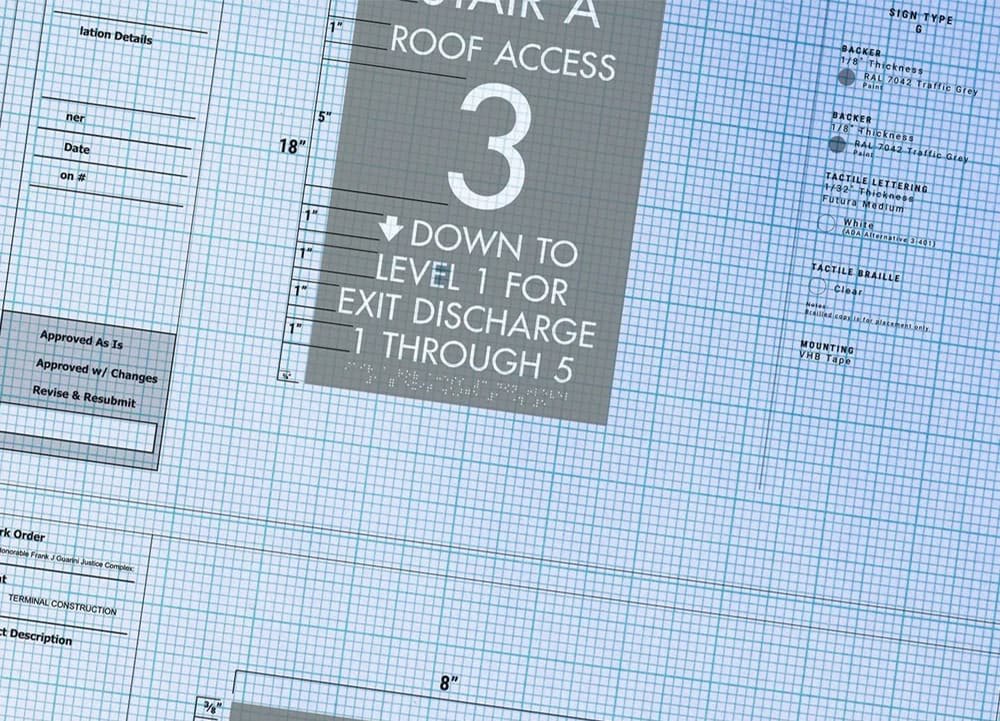
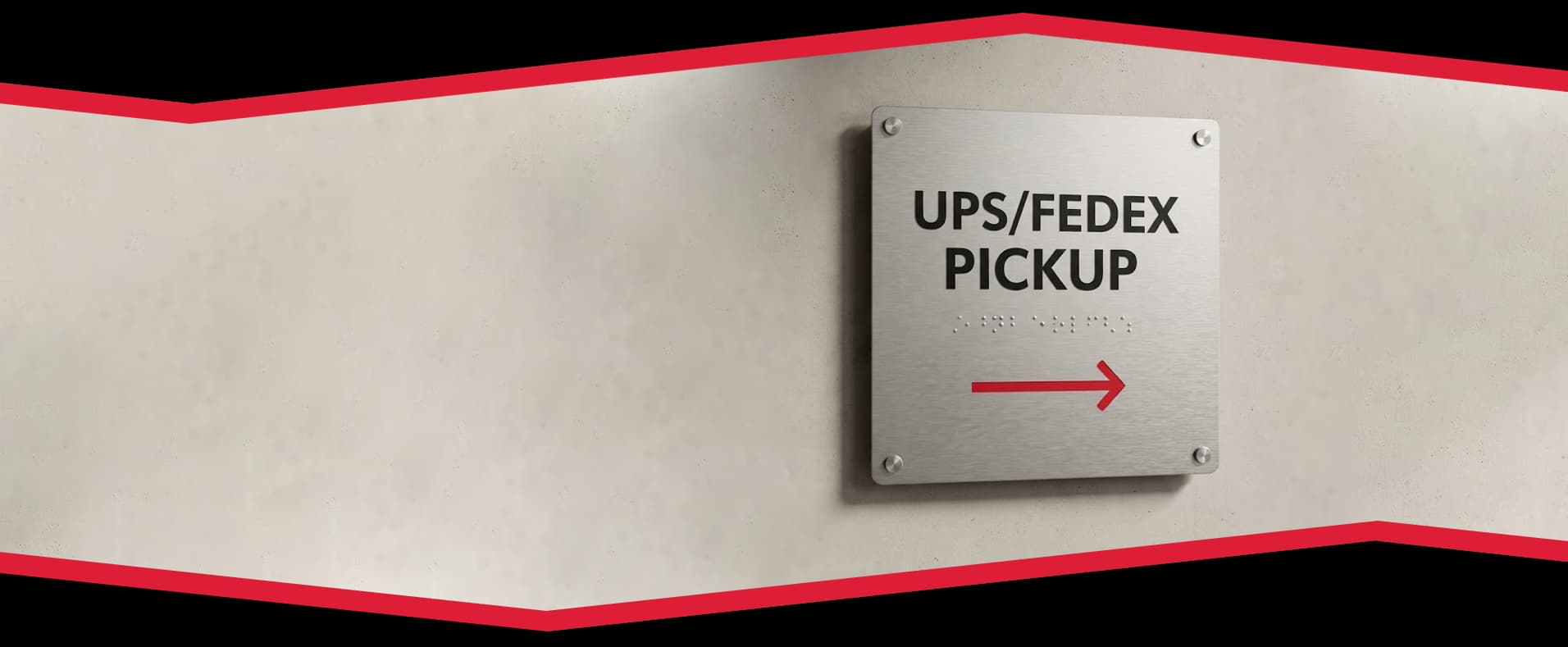
The Americans with Disabilities Act sets specific rules for signage, and they're not optional. Public spaces are required to follow them. That means tactile, raised characters paired with Grade 2 Braille, sized and spaced correctly, and mounted where someone can actually reach and read them without help.
Contrast matters just as much as touch. Characters need to stand out clearly from their background so people with low vision or color blindness can read them at a glance. Mounting height is regulated too, so signage stays usable whether someone's standing, seated, or in a wheelchair.
Pictograms come into play for a different reason. They get a message across without relying on written language at all, which helps anyone navigating a space regardless of what language they read or how they process information.
None of this is just a box to check. It's what makes a building usable by everyone who walks or rolls through the door. We build every sign with that in mind.
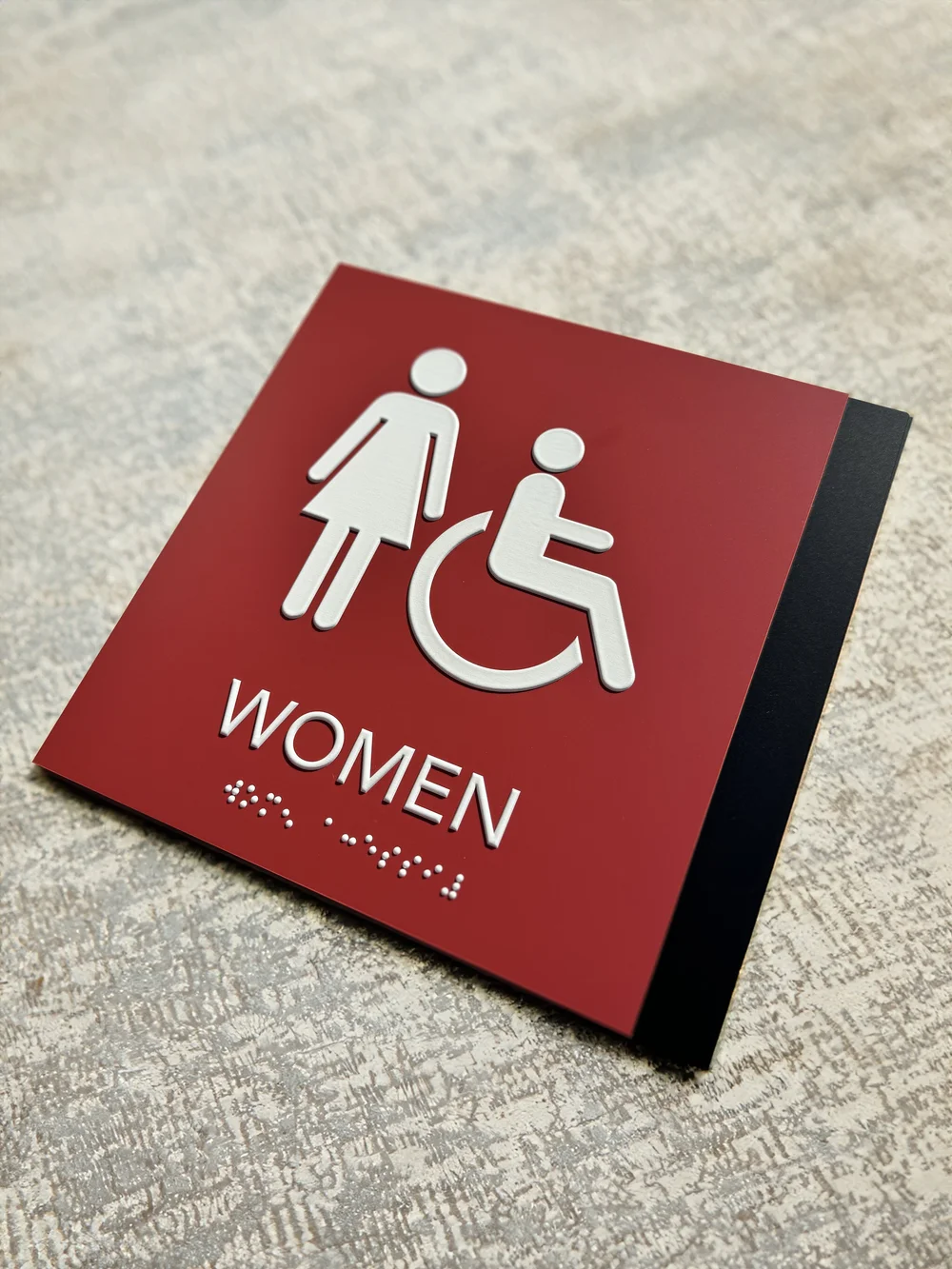
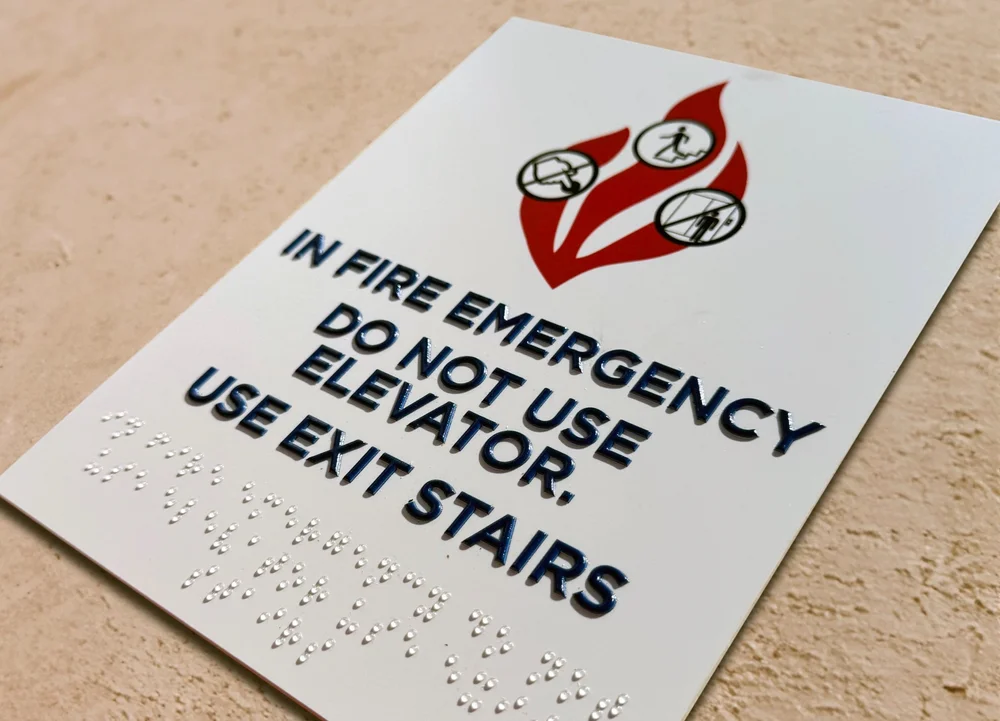
Another vital aspect of ADA-compliant signage is the inclusion of pictograms to convey information graphically. Pictograms serve as an efficient means to communicate messages universally without relying solely on written language, benefiting individuals with diverse linguistic backgrounds and those with cognitive or learning disabilities.
Adhering to these ADA standards for accessible design is not only a legal obligation for businesses and public entities, but it also reflects a commitment to inclusivity and equal access for all individuals. By ensuring that signage is ADA-compliant, organizations contribute to creating an environment where everyone, regardless of their abilities, can navigate spaces independently and confidently.
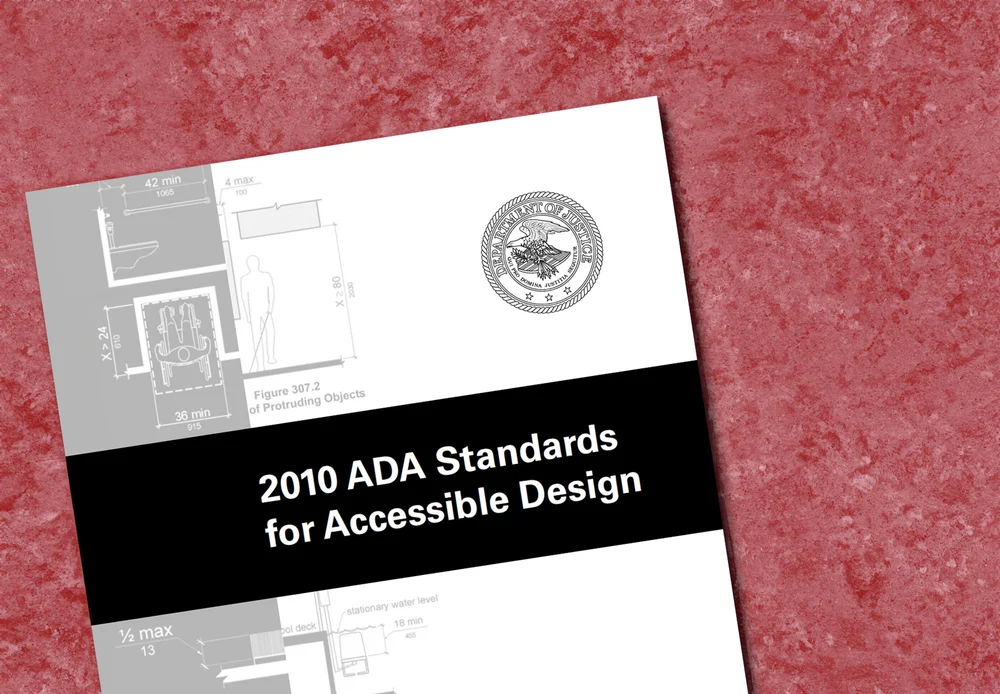
In September 2010, the Department of Justice published updated, enforceable accessibility standards under Titles II and III of the ADA. These set the baseline for scoping and technical requirements alike, covering how new and renovated government facilities, public accommodations, and commercial buildings need to handle accessibility, signage included.
To read the entire 2010 ADA Standards for Accessible Design, download the PDF.
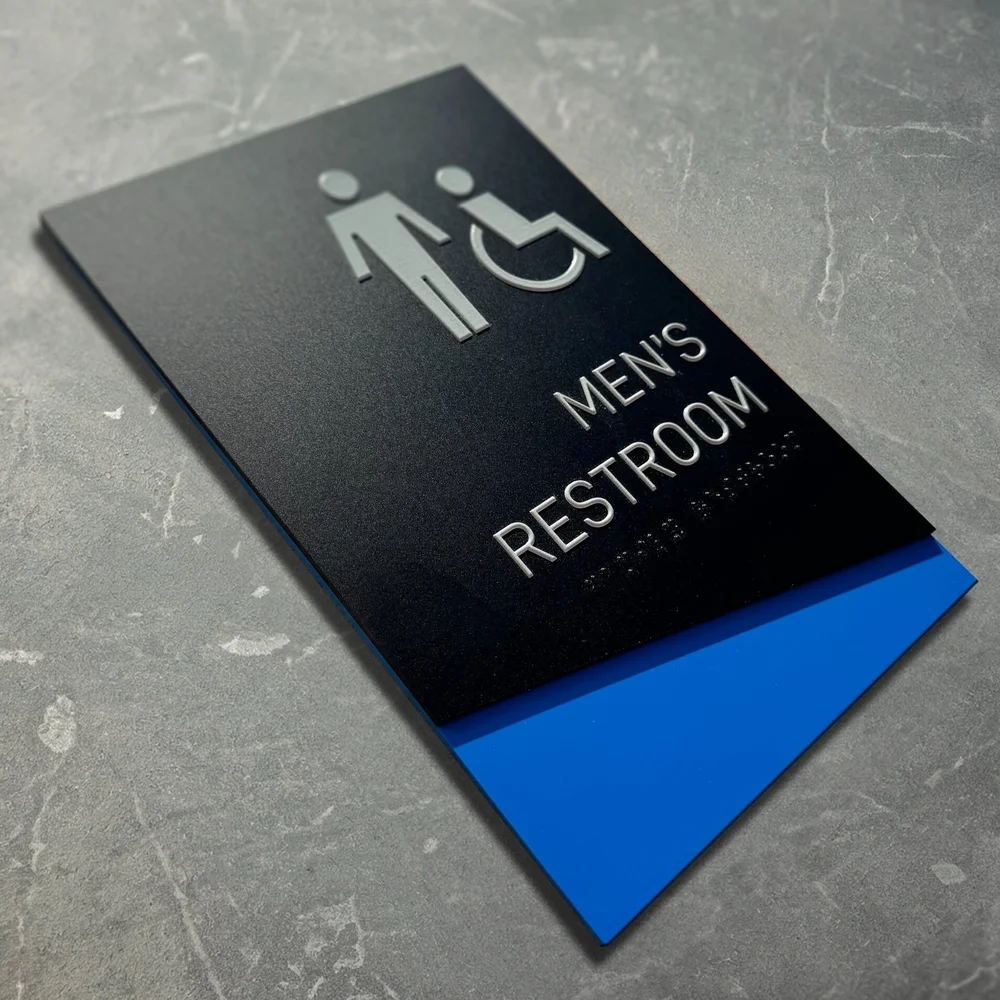
Room and space identification signs go on the wall next to the door, on the latch side. That consistency is what lets someone who's blind or has low vision find a sign by feel, without guessing. If there's no wall space on the latch side, the nearest adjacent wall works instead.
Raised characters need their baseline between 48" and 60" above the finished floor. That range keeps signage at a consistent, reachable height across a building. Lower placement is common in facilities designed for children.
If you have questions or need assistance with ADA compliance, please reach out. Our team is well-versed in ADA guidelines and regulations, and we are here to share our expertise in ADA-compliant signage. We are committed to ensuring accessibility for all individuals and are dedicated to helping you navigate ADA-compliance effectively.